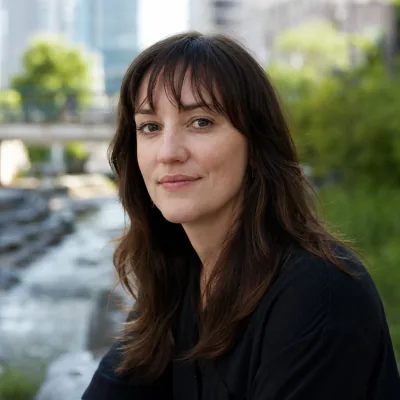
Jessica Warren
I trace Seoul through shrine courtyards, gallery floors, and old streets, so history feels readable when you arrive.
I moved to Seoul in my late twenties for what I thought would be a one-year change of pace after years of reporting on arts and heritage at home. I rented a small place near Anguk, learned to map my weeks by Line 3 and the walkable slope between Bukchon and Insadong, and found myself returning again and again to the same layers of the city: Joseon palaces, Buddhist temples tucked behind traffic, and sharp-edged galleries inside former industrial blocks. What made me stay was not novelty but texture. Seoul rewards repeat visits, and the more closely I looked, the more the city opened up through ritual, design, memory, and ordinary daily use.
For this site, I focus on the parts of Seoul where culture and history meet everyday movement. I cover palace compounds like Gyeongbokgung and Deoksugung, temple sites such as Jogyesa and Bongeunsa, museum districts around Yongsan and Jongno-gu, and the contemporary art corridors of Samcheong-dong, Hannam-dong, and Seongsu-dong. I pay attention to how people actually reach these places, whether that means taking Line 1 to City Hall, changing to Line 6 for Itaewon and Leeum Museum of Art, or planning a quiet weekday morning in Seochon before the crowds build. I also write about hanok areas, memorial spaces, seasonal exhibitions, and the practical realities that shape a visit.
My reporting is grounded in verification, not brochure language. I check admission prices directly with official museum, palace, temple-stay, and foundation sources, then confirm whether there are separate fees for special exhibitions, lockers, guided tours, or foreign-language audio guides. I recheck opening hours before publication and again during major holidays, because Seoul schedules can shift around Seollal, Chuseok, and exhibition changeovers. When I cite historical background, I cross-check Korean and English source material, including institutional records and curatorial notes, and I flag where translations flatten nuance. If a guide includes partner links, I state that clearly so readers can separate my reporting from any booking option.
English-speaking readers often need more than a list of sights. They need help understanding which palace is worth a rainy morning, which museum labels are strong in English, how to behave in an active temple, and when a contemporary art stop pairs naturally with a historic neighborhood rather than competing with it. That is the angle I bring. I write for people who want context without homework and practical detail without losing the meaning of the place. My aim is to make Seoul’s cultural landscape legible on the ground, so a reader can move from a stone gate to a video installation and understand how both belong to the same city.