Gyeongbokgung Palace

Gyeongbokgung Palace

Why visit

Who will love it

First-time visitors and history enthusiasts should prioritize Gyeongbokgung as it is the most architecturally significant and grandest of the five palaces. It offers the most impressive scale for photography and provides the best context for Joseon Dynasty history, especially if you time your visit for the Royal Guard Changing Ceremony at 10:00 or 14:00.

Who should skip it

Travelers seeking a more intimate or natural setting may prefer Changdeokgung for its Secret Garden, as Gyeongbokgung’s vast, open courtyards can feel crowded and exposed to the elements. If you have already visited several other traditional sites, the repetitive architecture here might not justify the long walk required to cover the entire complex.

What to know beforehand

The largest and most iconic of Seoul's five royal palaces, featuring the Royal Guard Changing Ceremony and expansive Joseon-era grounds.

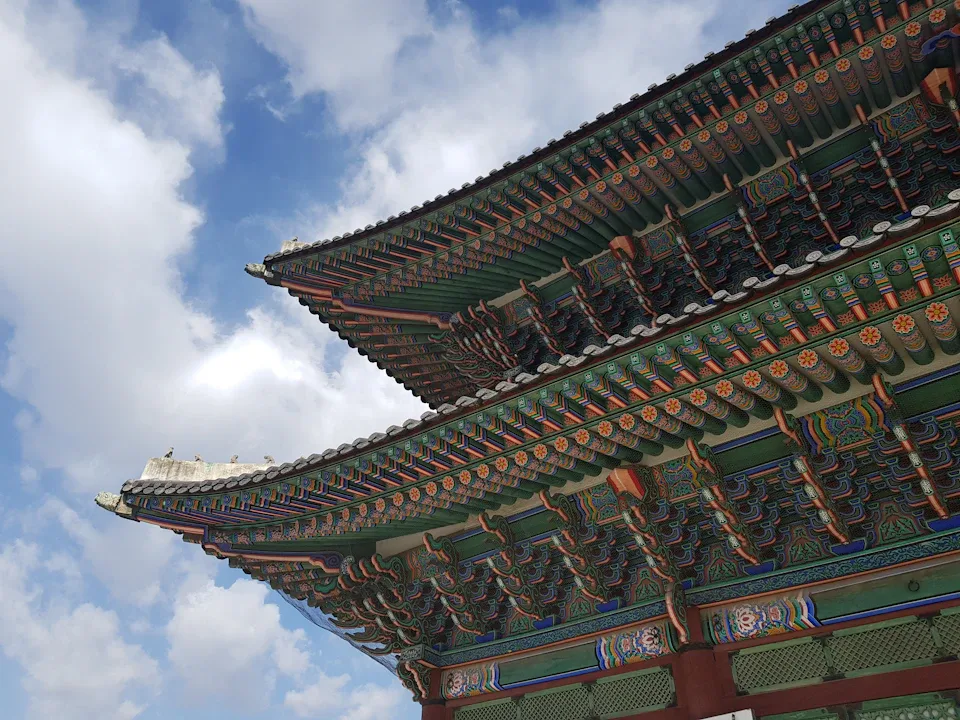
As the main royal palace of the Joseon Dynasty, Gyeongbokgung features the majestic Gyeonghoeru Pavilion and the National Folk Museum. The architecture showcases intricate dancheong paintwork and expansive stone courtyards that served as the heart of Korean politics for centuries.

At the 09:00 opening to experience the inner courtyards before the mid-morning tour groups arrive.

Standard admission is 3,000 KRW. Visitors wearing a full traditional Hanbok receive free entry.

The Royal Guard Changing Ceremony is held at 10:00 and 14:00 daily. The palace is closed every Tuesday.

Gyeongbokgung is vast, and the experience changes significantly depending on how far you walk past the initial throne hall. While the main entrance at Gwanghwamun stays crowded, the northern sections near the Hyangwonjeong Pavilion offer a much quieter, more contemplative atmosphere.

Wearing a Hanbok grants you free admission, but the grounds are mostly gravel; prioritize comfortable footwear over aesthetic accuracy to explore the full site.

This site is ideal for those who appreciate Joseon-era architecture and the precision of the Royal Guard Changing Ceremony. However, travelers expecting lavishly furnished interiors may feel underwhelmed, as most structures are empty shells. If you prefer a more intimate, wooded setting, the nearby Changdeokgung Palace is a strong alternative.

Local Insight: Arrive at Gwanghwamun Gate 15 minutes before the 10:00 or 14:00 ceremony to secure a spot at the front of the viewing line.

Gyeonghoeru pavilion reflected in a calm pond at Gyeongbokgung Palace

🎫 Tickets, tours & discounts

Which ticket to choose

For most visitors, the standard admission ticket at 3,000 KRW is the most practical choice. It grants full access to the palace grounds and the National Palace Museum of Korea. If you intend to visit multiple royal sites, the Integrated Palace Ticket for 10,000 KRW is superior value.

This pass covers Gyeongbokgung, Changdeokgung (including the Secret Garden), Changgyeonggung, Deoksugung, and Jongmyo Shrine.

  • Standard Admission: Best for a single 2-hour visit focused on the main halls.
  • Integrated Palace Ticket: Best for those spending two or more days exploring Seoul’s history.

A common mistake for first-time travelers is waiting in the long manual ticketing lines. Use the automated kiosks located near the main Gwanghwamun Gate to save time, as they support English and international credit cards.

Best time to visit

Arriving at 9:00 AM sharp is the best strategy to beat the large tour groups and photograph the Gyeonghoeru Pavilion in quiet surroundings. The Changing of the Guard ceremony is a major highlight, occurring daily at 10:00 AM and 2:00 PM in the courtyard between Gwanghwamun and Heungnyemun gates.

Plan to arrive 15 minutes before the ceremony to secure a spot at the front of the rope.

Photographers should aim for the morning light for the main throne hall or the special Night Openings, which require separate advanced booking and occur during specific seasons. Families should prioritize the 10:00 AM slot to catch the ceremony before the midday heat and crowds peak.

Combos and discounts

The most effective way to save is the Hanbok discount: entry is completely free for any visitor wearing a full traditional Korean Hanbok. Numerous rental shops are located in the nearby Bukchon Hanok Village and Seochon areas.

Gyeongbokgung is a primary inclusion in the Discover Seoul Pass and the Go City Seoul Pass. If you hold these, you can skip the ticket line and head to the designated counter. Additionally, entry is free for everyone on Culture Day, which is the last Wednesday of every month.

ImportantThe palace is closed every Tuesday. If your stay in Seoul is short, ensure you do not schedule your visit for this day.

When a tour makes sense

The palace grounds are vast, and the architectural symbolism—such as the significance of the roof figurines and the layout of the king’s quarters—is not always obvious. The palace provides free official guided tours in English starting from the information center inside the Heungnyemun Gate. These are excellent for a high-level historical overview.

Investing in a private guided tour makes sense if you want to dive deep into Joseon dynasty history or navigate the complex grounds efficiently without missing hidden spots like the Hyangwonjeong Pavilion. If you prefer a casual stroll and are mostly interested in the aesthetics and photography, a self-guided visit with the official map is sufficient.

View tickets

Arched bridge and palace entrance near Hyangwonjeong pond
Weather now
Seoul, South Korea
NowPartly cloudy 🌤️
Temperature19°C
VisibilityExcellent
AerosolsClean air · AOD 0.12

Good conditions for visiting today.

AOD — how much dust and haze in the air dim the distant view. 0 clean, >0.4 noticeable, >0.7 heavy.

Crowd indicator

Crowds peak heavily during the 10:00 AM and 2:00 PM Royal Guard Changing Ceremonies and on weekends, while Tuesdays are strictly closed.

When to go?

Mini-calculator based on crowd levels by day and time.

Best time at Mon — 18:00

This day has average visitor density. This slot has a higher chance of a comfortable visit: Site emptying out or closed depending on season.

30–50% · Quiet60–80% · Moderate90–100% · Crowded

Nearest days

TodayExpect heavy weekend crowds, especially around the main gate ceremonies.
10:0095%
12:0075%
14:0095%
16:0080%
17:0050%
18:0015%
TomorrowAnother busy weekend day; arrive by 9:00 AM for a quieter experience.
10:0090%
12:0070%
14:0090%
16:0075%
17:0045%
18:0010%
Day after tomorrowSlightly quieter than the weekend, but still busy during ceremony times.
10:0080%
12:0055%
14:0080%
16:0060%
17:0035%
18:005%
Front-facing palace hall across an open courtyard at Gyeongbokgung

How to find the entrance

1
Gyeongbokgung Station Exit 5Use Line 3 and follow the corridor directly into the palace grounds.
2
Gwanghwamun GateWalk through the central arch of the main stone gate into the outer courtyard.
3
Ticket OfficePurchase a 3,000 KRW ticket or enter for free if wearing a traditional Hanbok.
4
Heungnyemun GatePresent your ticket at the inner checkpoint to access the main throne hall area.

The most direct way to enter is via Gyeongbokgung Station (Line 3). Take Exit 5, which leads through a decorated stone portal directly onto the palace grounds. If you are coming from Gwanghwamun Square, you will walk through the massive Gwanghwamun Gate first.

Once inside the first gate, do not look for tickets at the street level; the ticket booths are located in the large inner courtyard before the second gate, Heungnyemun. Expect a brief delay if you arrive during the Changing of the Guard ceremony, as crowds gather and movement through the central archway is restricted.

  • Ticket queues are longest between 10:00 AM and 11:00 AM.
  • Visitors wearing a full Hanbok (traditional Korean dress) receive free admission but must still obtain a physical ticket at the booth.
  • Large bags must be stored in the lockers near the main entrance office as they are not permitted inside the palace buildings.
ImportantThe palace is closed every Tuesday. If you arrive on this day, the gates will be shut and no entry is permitted.
Stone path leading to an inner palace gate across a wide open courtyard

Practical limits & what to bring

Gyeongbokgung is a massive 40-hectare complex where you will spend most of your time walking on fine gravel and uneven stone paving. There is almost no shade in the main courtyards, so a hat or an umbrella is essential to handle the direct sun.

The palace is closed every Tuesday, and the most crowded times coincide with the Changing of the Guard ceremonies at 10:00 and 14:00.

While the palace is generally accessible, the gravel surfaces can make pushing a stroller or wheelchair physically demanding. If you are visiting with seniors or small children, plan for frequent breaks in the garden areas or the nearby museum pavilions. Entry is free for visitors wearing a full Hanbok (traditional Korean dress).

  • No food or colored beverages (bottled water is permitted)
  • No smoking or use of lighters anywhere on the grounds
  • No pets, except for registered service dogs
  • No drones or professional filming equipment without prior permits
  • No tripods or large selfie sticks in high-traffic areas
  • No sports equipment like balls, frisbees, or bicycles
  • Small backpacks and handbags are allowed

Free lockers are available near the main ticket office at the Gwanghwamun Gate and inside the National Palace Museum of Korea on the palace grounds. These lockers operate on a first-come, first-served basis; while they accommodate small bags, large suitcase slots are limited and often full by midday.

For heavy luggage, use the paid storage lockers at Gyeongbokgung Station (Line 3, Exit 5). Strollers and wheelchairs can be rented free of charge at the information center located behind the Heungnyemun Gate.

TipIf you are carrying a large backpack, the security staff may ask you to wear it on your front or leave it in a locker to prevent accidental damage to the painted wooden pillars of the historic buildings.
Front view of a palace hall with ornate eaves and signboard at Gyeongbokgung Palace

Location and what's nearby

About the Neighborhood

  • The historic core of Seoul where Joseon-era grandeur meets modern government administration and high-rise offices.
  • A cultural hub defined by wide boulevards, stone-walled walkways, and dozens of hanbok rental shops.
  • Ideal for travelers seeking traditional architecture, royal history, and quiet mountain backdrops in the city center.
  • The area transitions from busy political activity at the main square to serene, narrow alleys in the residential hills.

Nearby on Foot (up to 15 minutes)

  • National Folk Museum of Korea — immersive exhibits on traditional life located within the palace grounds · 2 minutes
  • Gwanghwamun Square — a massive public plaza featuring statues of King Sejong and Admiral Yi Sun-sin · 5 minutes
  • National Museum of Modern and Contemporary Art (MMCA) — cutting-edge Korean and international art in a sleek facility · 8 minutes
  • Bukchon Hanok Village — a preserved residential neighborhood of hundreds of traditional wooden houses · 12 minutes
  • The Blue House (Cheong Wa Dae) — the former presidential residence now open for public tours · 10 minutes
  • Jeongdok Public Library — a scenic garden and library complex perfect for a quiet break · 14 minutes

15–30 Minutes by Transport

  • Insadong Street — a vibrant district famous for traditional tea houses and antique shops · 10 minutes by taxi
  • Changdeokgung Palace — the UNESCO-listed royal residence known for its magnificent Secret Garden · 15 minutes by bus
  • Myeongdong Shopping Street — Seoul’s primary retail district filled with global brands and street food · 20 minutes by metro
  • N Seoul Tower — the iconic communication tower offering panoramic views from Namsan Mountain · 25 minutes by taxi
  • Ikseon-dong Hanok Village — a trendy maze of narrow alleys filled with boutique cafes · 15 minutes by metro

Where to Eat Nearby

  • Tosokchon Samgyetang — legendary ginseng chicken soup in a traditional hanok · mid-range · no reservation needed · 10 min walk
  • Hwangsaengga Kalguksu — Michelin-listed handmade noodle soup and dumplings near the museum district · mid-range · no reservation needed · 7 min walk
  • Mishmash — creative contemporary Korean cuisine with a direct view of the palace walls · high-end · reservation recommended · 5 min walk
  • Gwanghwamun Gukbap — simple and clean pork soup favored by local office workers and foodies · budget · no reservation needed · 15 min walk

Ready-made Day Itinerary

Start your morning at Gyeongbokgung Palace to catch the changing of the guard ceremony before exploring the throne halls and pavilions. For lunch, head west to Tosokchon Samgyetang for their famous chicken soup, then spend the afternoon wandering the hilly alleys of Bukchon Hanok Village.

End the day with a sunset walk through Gwanghwamun Square, watching the city lights flicker on against the backdrop of the ancient gates.

NoteRenting a hanbok from nearby shops grants free admission to the palace and makes for excellent photos in the historic courtyards.
Symmetrical palace hall seen through a dark doorway at Gyeongbokgung
Reference

Facts

Read more

Numbers and Scale

  • Total area: 410,000 square meters, making it the largest and most significant of the Five Grand Palaces built during the Joseon Dynasty.
  • Peak capacity: 330 buildings containing 5,793 rooms were recorded in the 1860s before the Japanese colonial period began.
  • Throne Hall height: 22.5 meters for Geunjeongjeon, which served as the highest point for state ceremonies and royal audiences.
  • Pavilion support: 48 massive stone pillars hold up Gyeonghoe-ru, the largest elevated wooden pavilion in South Korea.
  • Restoration scale: 40 percent of the original palace structures have been rebuilt under a multi-decade government project to restore national heritage.

Myths and Misconceptions

  • Myth: Gyeongbokgung is the original, untouched residence of the Joseon kings. Reality: Almost all structures are modern reconstructions, as the palace was burned down in 1592 and largely demolished in 1911.
  • Myth: The palace was the primary royal home for the entire Joseon era. Reality: It was abandoned for 273 years after the Imjin War, during which Changdeokgung Palace served as the main seat of power.
  • Myth: Wearing Hanbok is a mandatory dress code for all visitors entering the grounds. Reality: Hanbok is optional, though the government offers a benefit where those wearing traditional dress receive complimentary admission.
  • Myth: The stone statues on the roofs are purely decorative elements for the King's pleasure. Reality: These figures, known as Japsang, are protective talismans representing characters from the Journey to the West to ward off evil.

Rare and Unusual

  • Hidden heating: The King's living quarters use an Ondol underfloor heating system with smoke vents cleverly disguised as decorative garden walls.
  • Bird protection: Fine iron nets called Bujwa are stretched under the colorful eaves to prevent birds from nesting and acidic droppings from corroding the paint.
  • Engineering drainage: The stone courtyard of the Throne Hall is paved with rough, uneven granite to reduce sun glare and facilitate rapid water runoff.
  • Secret symbols: The Jagyeongjeon chimney is decorated with ten symbols of longevity, acting as a mural of wishes for the Queen Dowager's health.
  • Floating pavilion: Gyeonghoe-ru was designed to appear as if it is floating on a lotus pond, with the outer square pillars representing earth and inner round pillars representing heaven.
Background

History

Read more

Gyeongbokgung Palace

Seoul

South Korea

A Legacy Reclaimed

Gyeongbokgung, the 'Palace Greatly Blessed by Heaven,' was established in 1395 as the primary residence of the Joseon Dynasty. Its strategic location was chosen for its auspicious energy, positioned between the guardian mountains and the heart of the capital.

As the largest and most important of the Five Grand Palaces, it functioned as the political center where kings conducted state affairs and hosted foreign envoys.

The palace has survived significant periods of hardship, including total destruction during the 16th-century invasions and further dismantling during the early 20th-century colonial era. For centuries, the grounds remained vacant until a major reconstruction effort in the late 1800s restored hundreds of buildings.

Today’s visitors see the fruits of an ongoing, decades-long restoration project dedicated to rebuilding the complex to its original 19th-century scale and architectural precision.

Beyond its architectural grandeur, Gyeongbokgung remains a vital pulse of Korean identity. The daily Changing of the Guard ceremony and the practice of visitors entering the grounds in traditional Hanbok clothing keep the Joseon era’s customs alive.

It serves as a physical bridge between Korea’s royal heritage and the high-tech skyline of modern Seoul, making it the essential starting point for understanding the city's soul.

Gwanghwamun gate and Seoul skyline across the palace forecourt

♿ Accessibility & families

Accessible with minor terrain challenges

Excellent for all ages; free for kids under 7

Gyeongbokgung Palace is largely accessible for wheelchair users and visitors with reduced mobility. The main courtyards and primary paths are flat, though the traditional stone paving can be bumpy and some secondary structures have raised wooden thresholds.

Ramps are installed at the major pavilions, including Geonjeongjeon Hall. Manual wheelchairs are available for free at the information center near the Heungnyemun Gate.

Families with strollers can navigate the grounds effectively, as there are no mandatory stairs to view the main architectural highlights. Free stroller rentals are provided at the entrance for children under 3 years old.

Because the complex spans 40 hectares, parents should prepare for extensive walking; the inner courtyards offer very little shade, so sun protection is necessary for young children.

Admission is free for children aged 6 and under, as well as for seniors aged 65 and over. Visitors aged 7 to 18 qualify for a discounted rate of 1,500 KRW. There are no specific age limits for entry, but children must be accompanied by an adult at all times.

The palace is a quiet historical site, so while children are welcome, active running or climbing on the stone monuments is prohibited.

🏢 On-site amenities

On-Site Amenities

Restrooms and Water

Clean, free public restrooms are located near the Heungnyemun Gate entrance, the National Palace Museum, and the National Folk Museum. Drinking water fountains are situated near these restroom blocks, and visitors are permitted to bring their own water bottles into the palace grounds.

Cafes and Gift Shops

The Sarang cafe near the main entrance offers a casual setting for tea and light refreshments. For a more formal experience, the Saenggwabang tea house serves traditional Korean tea and royal desserts in a historic building; this location uses a queue system for entry.

Gift shops are located near the entrance and inside the National Palace Museum, specializing in traditional Korean crafts, stationery, and museum-quality souvenirs.

Connectivity and Family Facilities

Free public Wi-Fi is available throughout the main palace areas. For visitors with young children, dedicated nursing rooms and baby-changing facilities are accessible inside the National Palace Museum of Korea, located within the palace complex.

Reliability & freshness

UpdatedMay 20, 2026

I live in Seoul and have spent seven years here writing clear, practical guides for English-speaking visitors.